Latest Post
Prodigious Savants and their Abilities
Savant syndrome, a condition occurring most often in autistic patients, is a rare disorder where mentally retarded individuals have incredible abilities in isolated fields like memory, mathematics, and music. Even more uncommon are the subset of “prodigious” savants, those whose talents would be considered genius even without any impairment.
Prodigious savants are great examples (I hope my presentation here is as tactful as possible) of the incredible abilities of the mind. Even more remarkable is the increasingly favored view that savantism arises from a disturbance in the balance of influence between the brain’s hemispheres. The enhanced abilities in music and calculation are typically dominated by the right hemisphere, while the impaired social and language capacities are tied to the left hemisphere. Improper development is thought to be the cause in autistic patients, but even physical damage to regions of the left hemisphere (specifically frontotemporal) can give rise to talents that did not exist before.
These abilities could actually lie dormant in each of us, suppressed by the left-brain to prevent a potentially overwhelming clamor of unchecked sensory input and internal processing. Below are some cases of prodigious savants:
-
 Leslie has a remarkable memory and was able to recite an entire day’s conversation, even including the intonation. At 14, Leslie heard Tchaikovsky’s Piano Concerto No. 1 just once and played it in its entirety from memory.
 -
 The inspiration for the movie Rain Man, “Kimputer” was born without a corpus collosum (the thick band of axons connect the left and right hemispheres). Kim is capable of incredible feats of memory and calculation. He can recall over 7,600 books, has a nearly complete (and up-to-date) knowledge of world history, area codes, zip codes, roads and highways and much more.
 -
 Stephen’s abilities are in art and visual memory. From the age of 12, Stephen could draw from memory an extremely accurate representation of any scene, even after only seeing it a single time.
 -
 One of the more focused abilities, Alonzo showed a remarkable talent for sculpture from a young age. He can even produce sculptures from two-dimensional subjects (an image on television for example). Also remarkable is the speed with which he creates his works, a life-size sculpture of three moving horses took him only three weeks, and he can create smaller models in minutes.
 -
 Daniel is even more unique in that he is a high-functioning savant, meaning he has an above average IQ and can process and respond to social cues normally. He has written several books describing in detail what he sees in his mind and how it allows him to do the things he does. Tammet became famous for breaking the European record when he recited Pi to 22,514 decimal places. Tammet’s savantism includes a form of synesthesia where numbers take various shapes and textures that aid in their manipulation. A number’s “bumpiness” for example indicates whether or not it is prime.
 -
Flo & Kay, Savant Twins
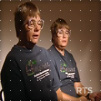 The twins demonstrated incredible gifts with mathematics and calendar calculation (along with the strong genetic component of autism and savantism). Given any date, the twins could calculate the day of the week it landed on nearly instantaneously, even thousands of years in the future. A researcher once saw the pair exchanging six-digit numbers. Once he realized they were prime numbers, he joined in with an eight-digit number, which the pair quickly realized was also prime. The twins were soon trading 20-digit prime numbers and the researcher was forced to drop out as they exceeded even those in his reference of primes.
There are many more documented savants with equally unique talents. I remember a savant from middle school who memorized the phone numbers of every student, and another who could provide the fastest route between two cities anywhere in the country, even accounting for construction and regular traffic. More rare savants have exceptional abilities in language, spatial navigation (like marking a clear path through thick brush), time (perfect internal clocks), and heightened senses of smell, vision and touch.
These abilities are more than dismissible edge cases, as we cannot understand how the brain works unless we understand all of its amazing capabilities. It’s really amazing that this is our potential as human beings. If you’re interested read this where I talk a bit about the evolution of consciousness and what savants can tell us.
- Courchesne, E., Carper, R., and Akshoomoff, N. (2003). “Evidence of Brain Overgrowth in the First Year of Life in Autism.” Journal of American Medicine, 290(3), 337-344.
- O’Conner, N. and Hermelin, B., (1989). “The Memory Structure of the Autistic Prodigious-Savant Mnemonists.” British Journal of Psychology, 80(1), 97-111.
- Sacks, Oliver W. (1990). The Man Who Mistook His Wife for a Hat and Other Clinical Tales. Harper Perennial Library. New York.
- Treffert, D. A., Wallace, G. L., (2003). “Islands of Genius: Artistic Brilliance and a Dazzling Memory can Sometimes Accompany Autism and other Developmental Disorders.” Scientific American Mind, 14(1), 14-23.
Archive
-
260.
The Ethics of Practicing Procedures on the Nearly Dead
The report from the field was not promising by any stretch, extensive trauma, and perhaps most importantly unknown “downtime” (referencing the period where the patient received no basic care like...
-
260.
The Ethics of Teaching Hospitals
I can’t imagine what the patient was thinking. Seeing my trembling hands approaching the lacerations on his face with a sharp needle. I tried to reassure him that I knew what I was doing, but the...
-
260.
Conscious Conversation: Behavioral Science
Dr. Eran Zaidel is a professor of Behavioral Neuroscience and faculty member at the Brain Research Institute at UCLA. His work focuses on hemispheric specialization and interhemispheric interaction...
-
260.
Progress Report
Two years down, I’m still going. The next two years are my clinical rotations, the actual hands-on training. It’s a scary prospect, responsibilities and such; but it’s equally exciting, after...
-
260.
Why Medical School Should Be Free
There’s a lot of really great doctors out there, but unfortunately, there’s also some bad ones. That’s a problem we don’t need to have, and I think it’s caused by some problems with the...
-
260.
The Cerebellum: a model for learning in the brain
I know, it’s been a while. Busy is no excuse though, as it is becoming clear that writing for erraticwisdom was an important part of exercising certain parts of my brain that I have neglected...
-
260.
Conscious Conversation: Philosophy
Daniel Black, author of Erectlocution, was kind enough to chat with me one day and we had a great discussion – have a listen.
-
260.
The Stuff in Between
I’m actually almost normal when not agonizing over robot production details, and quite a bit has happened since I last wrote an update. First, I’ve finally graduated. I had a bit of a...